Formative research on strategies to improve food donation in grocery retail
DOI:
https://doi.org/10.5304/jafscd.2026.154.013
Keywords:
human-centered design, participatory research, qualitative methods, food donation, wasted food, grocery retailAbstract
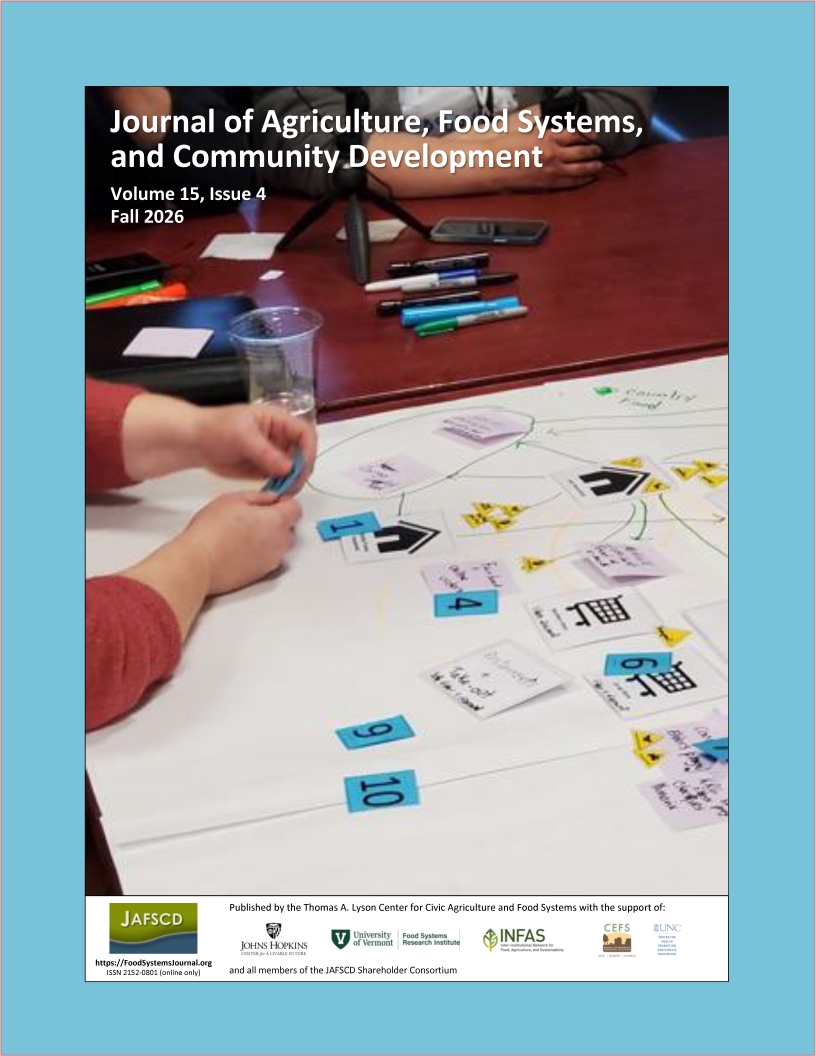
Over one-third of food produced in the U.S. goes unsold or uneaten, including a large portion of high-quality food that could be donated to individuals utilizing the charitable food system. This formative research study explored barriers to donation and created strategies to improve donation among frontline grocery retailer workers. In this study, we conducted in-depth interviews with grocery retail workers (n = 28), corporate leadership (n = 6), and donation partners (n = 5), and a series of in-person meetings with a cohort of 10 frontline worker “Champions” from a large U.S. grocery retail chain to identify common barriers to food donation and co-design strategies to reduce wasted food and improve food donation in their stores. We created four strategies: (1) conduct new trainings; (2) utilize updated donation guidelines with posters and detailed handouts; (3) strengthen connections between donation partners, associates, and stores; and (4) run a donation incentives contest. Additionally, Champions highlighted the need for open, clear, timely, accessible, and reciprocal communication and feedback as essential to the success of all four strategies. As organic waste ban policies expand, grocery retailers will need to increase the use of alternative solutions, such as donating, to manage surplus food. This project breaks new ground by not only working to identify and address the barriers faced and prioritized by frontline workers, but also by centering the workers themselves to create responsive strategies.
Metrics
Downloads
Published
How to Cite
Issue
Section
License
Copyright (c) 2026 Kaitlyn Harper, Steffanie Espat, Lee Davis, Nicole Labruto, Roni Neff

This work is licensed under a Creative Commons Attribution 4.0 International License.
The copyright to all content published in JAFSCD belongs to the author(s). It is licensed as CC BY 4.0. This license determines how you may reprint, copy, distribute, or otherwise share JAFSCD content.