Revaluing waste: Care, recirculation, and food politics in Truffles and Trash
DOI:
https://doi.org/10.5304/jafscd.2026.154.031
Keywords:
food waste, food recirculation, Brussels, social welfare systemsAbstract
First paragraphs:
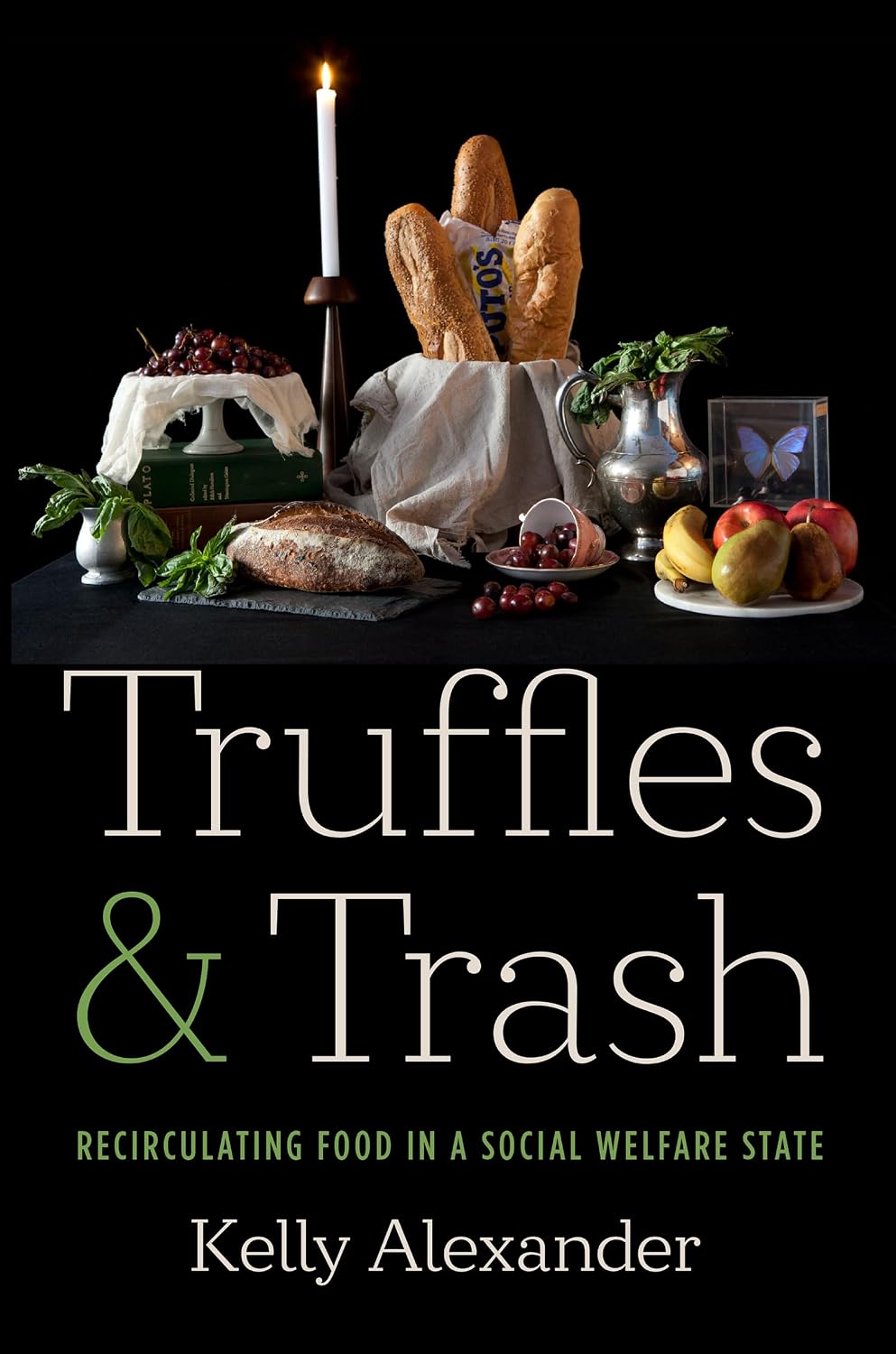
Kelly Alexander’s Truffles and Trash: Recirculating Food in a Social Welfare State traces the movement of edible but discarded food through Brussels’ expanding network of food-recirculation initiatives. The book enters a global conversation on food waste intensified by the 2011 Food and Agriculture Organization of the United Nations (FAO) report estimating that one-third of food produced for human consumption is lost or wasted. Rather than framing waste as the individual consumer’s responsibility, Alexander situates it within the structural logics of capitalist food systems. As she explains, “This project is about innovative and creative ways to recirculate discarded food before it becomes food waste, and to do that as a way of caring for other people and for the planet” (p. 41, emphasis in original).
Alexander—an anthropologist and food studies scholar—entered the project curious about how certain foods, especially truffles, acquire extraordinary value—or are overvalued. Her apprenticeship at La Truffe Noire, a Michelin-starred restaurant in Brussels built around one of the world’s most expensive ingredients, quickly confronted her with a different reality: the sheer volume of edible food routinely discarded. “I felt ill peering into that bin every day, seeing so much good-looking food go uneaten” (p. 12). That encounter became a pivotal moment, shifting her focus from why some foods are prized to how food gains and loses value along a spectrum of edibility. What began as a fixation on waste in one high-end kitchen broadened into a study of food waste across Brussels, exploring how surplus is produced, judged, and redistributed. . . .
Metrics
Downloads
Published
How to Cite
License
Copyright (c) 2026 Sofia Francisco

This work is licensed under a Creative Commons Attribution 4.0 International License.
The copyright to all content published in JAFSCD belongs to the author(s). It is licensed as CC BY 4.0. This license determines how you may reprint, copy, distribute, or otherwise share JAFSCD content.