Work to worldview: Rancher identity and cultural solidarity in Cow Talk
DOI:
https://doi.org/10.5304/jafscd.2026.153.027
Keywords:
cow talk, cattle ranching, environmental history, labor and work culture, political identity, American Mountain West, ranching discourse, discourse analysisAbstract
First paragraphs:
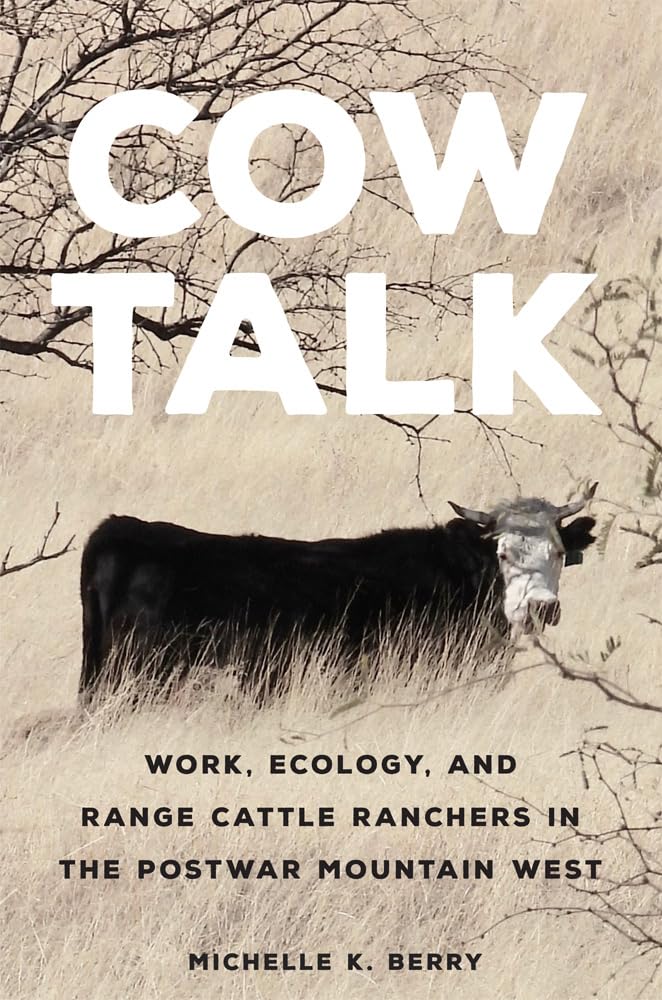
Histories of western ranchers have often treated them primarily as political antagonists of the federal state or as precursors to late-twentieth-century protest movements. Cow Talk challenges this framing by asking how ranchers in the postwar Mountain West came to imagine themselves as a cohesive community long before those conflicts crystallized. Berry frames cow talk as a ranching analog to shop talk, emphasizing how occupational language helped forge solidarity among cattle ranchers, a shared occupational vernacular rooted in everyday cattle work.
Ranchers’ recurring stories of drought, blizzards, disease, and market collapse form the experiential core of Cow Talk. Berry argues that these shared narratives, circulated through association meetings and publications, allowed cow talk to function as a form of cultural glue, enabling ranchers to manage profound postwar changes such as mechanization, scientific management, federal regulation, ecological instability, and demographic pressure without fracturing internally. In Berry’s telling, cow talk was not merely slang or occupational chatter but a powerful discourse that framed how ranchers understood threats, elevated forms of labor, and justified claims to expertise, authority, and entitlement. By repeatedly narrating shared hardships and triumphs, such as recurring environmental and market crises, ranchers constructed a sense of common fate that muted divisions of class, gender, and race while reinforcing a singular producer identity. While Berry persuasively demonstrates how cow talk forged cultural solidarity, this emphasis invites further scrutiny of how that solidarity depended on the selective suppression of class distinctions between ranch owners and wage laborers, as postwar ranching became increasingly capital-intensive. . . .
Metrics
Downloads
Published
How to Cite
Issue
Section
Categories
License
Copyright (c) 2026 Alexandre Rehbinder

This work is licensed under a Creative Commons Attribution 4.0 International License.
The copyright to all content published in JAFSCD belongs to the author(s). It is licensed as CC BY 4.0. This license determines how you may reprint, copy, distribute, or otherwise share JAFSCD content.